
What is Digital Marketing? A Simple Guide for Business Owners
Digital marketing explained in plain language. Learn what digital marketing is, how it works, and why every business owner in India needs to understand it to grow in 2026.
Key Takeaways
Digital marketing is one of those terms everyone throws around but few business owners truly understand. If you've been running your business the traditional way — relying on referrals, walk-ins, and newspaper ads — this guide is for you.
Here's what you'll learn in this comprehensive guide.
Digital marketing is simply marketing done online. It includes everything from Google search ads and social media posts to email campaigns and WhatsApp messages. If it happens on the internet, it's digital marketing.
You don't need to be tech-savvy to use it. Modern platforms like Bharat Funnels make digital marketing accessible to anyone who can use a smartphone. No coding, no technical expertise required.
Digital marketing is measurable. Unlike a newspaper ad where you have no idea who saw it, digital marketing tells you exactly how many people viewed, clicked, and bought from your campaigns.
It works for every business size. Whether you're a chai shop owner in Lucknow or a coaching institute in Bangalore, digital marketing can bring you more customers at a fraction of traditional marketing costs.
India's digital revolution makes this urgent. With 800+ million internet users, your customers are already online. The question isn't whether to do digital marketing — it's how fast you can start.
What Exactly Is Digital Marketing?
Let me make this as simple as possible.
Digital marketing is any marketing activity that uses the internet or electronic devices to reach customers.
That's it. No complicated jargon needed.
When you post about your business on Instagram — that's digital marketing. When you send a WhatsApp message to a potential customer — that's digital marketing. When your business shows up on Google when someone searches for your service — that's digital marketing.
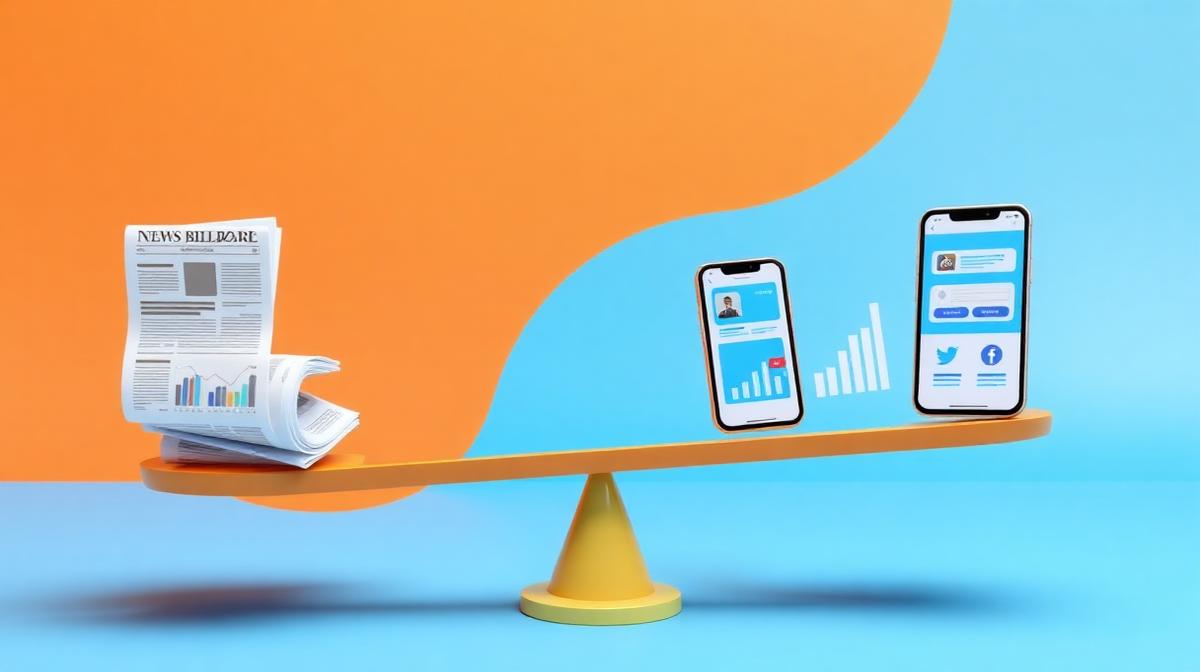
Think of it this way: traditional marketing uses newspapers, TV, radio, billboards, and flyers to reach people. Digital marketing uses Google, Facebook, Instagram, WhatsApp, email, and websites to do the same thing — but smarter, cheaper, and with better results.
The 7 Main Types of Digital Marketing
Here's a quick overview of the major digital marketing channels:
• Search Engine Optimization (SEO): Making your website show up when people search on Google• Social Media Marketing: Promoting your business on Instagram, Facebook, LinkedIn, and YouTube• Pay-Per-Click Advertising (PPC): Running paid ads on Google and social media platforms• Email Marketing: Sending newsletters, offers, and updates to your subscriber list• WhatsApp Marketing: Using WhatsApp Business API for automated customer communication• Content Marketing: Creating blogs, videos, and guides that attract potential customers• Affiliate Marketing: Partnering with others who promote your products for a commission
| Channel | Best For | Cost Level | Time to Results |
|---|---|---|---|
| SEO | Long-term organic traffic | Low-Medium | 3-6 months |
| Social Media | Brand awareness & engagement | Low-Medium | 1-3 months |
| PPC (Google Ads) | Immediate leads & sales | Medium-High | Immediate |
| Email Marketing | Customer retention & nurturing | Low | 1-2 months |
| WhatsApp Marketing | Direct customer communication | Low | Immediate |
| Content Marketing | Authority building & SEO | Low | 3-6 months |
Why Does Digital Marketing Work So Well?
Three words: targeting, measurement, and cost.
With traditional marketing, you put up a billboard and hope the right people see it. With digital marketing, you can show your ad specifically to 25-40 year old women in Mumbai who are interested in fitness and have visited gym websites in the last 30 days.
That level of targeting was impossible before the internet. And it's what makes digital marketing so powerful for businesses of every size.
How Does Digital Marketing Work? A Step-by-Step Breakdown
Digital marketing might seem overwhelming, but the basic process is actually quite simple. Here's how it works in practice.
Step 1: Attract the Right People
The first step is getting potential customers to notice your business online. This happens through:
• Creating a Google Business Profile so local customers find you• Posting engaging content on social media• Running targeted ads on Facebook, Instagram, or Google• Writing blog posts that answer your customers' questions• Optimizing your website for search engines
Step 2: Capture Their Interest
Once someone discovers your business, you need to capture their contact information. This is where most Indian businesses fail — they get visitors but don't convert them into leads.
Smart digital marketers use:
• Landing pages with clear calls-to-action• Lead magnets (free guides, checklists, or consultations)• WhatsApp opt-in buttons on websites• Contact forms and inquiry buttons
Step 3: Nurture the Relationship
Not everyone buys immediately. In fact, studies show that the average customer needs 7-8 touchpoints before making a purchase decision.
This is where automation becomes crucial:
• Automated email sequences that educate and build trust• WhatsApp follow-up messages with relevant offers• Retargeting ads that remind visitors about your business• Social media content that keeps you top-of-mind
Ready to Automate Your Digital Marketing?
Bharat Funnels gives you everything — funnels, CRM, WhatsApp automation, and email marketing — in one platform. No need to juggle 10 different tools.
Start Your Free Trial →Step 4: Convert Leads into Customers
With proper nurturing, leads become ready to buy. Your digital marketing system should make purchasing easy:
• Simple payment pages with Razorpay or Instamojo integration• Clear pricing pages with social proof• Limited-time offers delivered via WhatsApp or email• One-click checkout experiences
Step 5: Retain and Get Referrals
The best digital marketers know that the real profit comes from repeat customers. After someone buys:
• Send thank-you messages via WhatsApp• Ask for Google reviews• Create loyalty programs• Offer exclusive deals to existing customers• Ask for referrals with incentives
This five-step process is what separates businesses that struggle online from those that thrive.
Digital Marketing vs Traditional Marketing: The Key Differences
If you're still spending most of your marketing budget on traditional channels, let me show you why that might not be the best approach anymore.
Reach: Traditional marketing is limited by geography. A newspaper ad in Times of India only reaches that newspaper's readers. A Facebook ad can reach any of India's 500+ million social media users.
Cost: A full-page ad in a major newspaper costs ₹5-15 lakhs. A Facebook ad campaign can start at ₹500 per day and reach thousands of targeted potential customers.
Measurement: With traditional marketing, you can't tell if someone bought your product because of your newspaper ad or your billboard. With digital marketing, you know exactly which ad, which keyword, and which campaign generated each sale.
Targeting: Traditional marketing uses a spray-and-pray approach — show your ad to everyone and hope the right people notice. Digital marketing lets you target specific demographics, interests, behaviors, and even people who've visited your website before.
Speed: Want to change your newspaper ad? You'll have to wait for the next edition. Want to change your Google Ad? You can do it in 5 minutes.
Interaction: Traditional marketing is one-way communication. You put out an ad and wait. Digital marketing allows two-way conversations — customers can comment, message, review, and engage with your business in real-time.
This doesn't mean traditional marketing is dead. For certain businesses and goals, offline marketing still works. But for most Indian businesses, the ROI from digital marketing is significantly higher.
Why Indian Business Owners Must Embrace Digital Marketing Now
India is experiencing a digital revolution unlike anything the world has ever seen. Here are the numbers that matter:
800+ million internet users — India has the second-largest online population in the world, and it's still growing rapidly.
500+ million smartphone users — Your customers carry a marketing channel in their pocket every day.
450+ million WhatsApp users — India is WhatsApp's largest market globally. Your customers are already on WhatsApp.
200+ million online shoppers — Indians bought ₹5.5 lakh crore worth of products online in 2025, and this number is growing 25%+ every year.
UPI transactions crossed ₹20 lakh crore monthly — Indians are comfortable making digital payments.
What do these numbers mean for your business? Simple: your customers are already online, searching, browsing, and buying. If your business isn't visible digitally, you're invisible to a massive portion of your potential market.
The COVID Effect Was Permanent
The pandemic forced millions of Indian businesses online. But here's what most people don't realize — customers didn't go back to their old habits. They discovered the convenience of researching online, comparing prices digitally, and buying from businesses with a strong online presence.
The businesses that adapted to digital marketing during 2020-2022 are now thriving. Those that didn't are struggling with declining footfall and shrinking customer bases.
Your Competitors Are Already Digital
Look at your competitors. Check if they have a Google Business listing. See if they're running Facebook ads. Search for your industry keywords on Google. If your competitors are there and you're not, you're losing customers every single day.
Don't Get Left Behind
Bharat Funnels helps Indian businesses go digital in days, not months. CRM, funnels, WhatsApp automation — everything you need in one platform built for India.
Book Your Free Demo →How to Get Started with Digital Marketing: A Practical Roadmap
If you're new to digital marketing, here's a simple roadmap to follow. You don't need to do everything at once — start with the basics and build from there.
Week 1-2: Build Your Foundation
• Create a Google Business Profile (it's free and essential for local businesses)• Set up a simple website or landing page• Create business accounts on Instagram, Facebook, and LinkedIn• Set up a WhatsApp Business account
Week 3-4: Start Creating Content
• Post 3-4 times per week on social media• Share customer testimonials and behind-the-scenes content• Start writing simple blog posts answering common customer questions• Create short videos showcasing your products or services
Month 2: Start Paid Advertising
• Begin with a small Facebook/Instagram ad budget (₹500-1000/day)• Run Google Ads for your most important keywords• Test different ad formats and audiences• Track which ads generate actual inquiries and sales
Month 3: Implement Automation
• Set up automated email sequences for new leads• Create WhatsApp automation for customer follow-ups• Build a simple sales funnel for lead generation• Implement a CRM to track all your leads and customers
Month 4+: Optimize and Scale
• Analyze what's working and double down on it• Cut campaigns that aren't generating ROI• Invest in SEO for long-term organic traffic• Consider content marketing for authority building
The key is to start simple and build gradually. You don't need to master every channel on day one. Pick one or two channels, get good at them, and then expand.
Common Digital Marketing Mistakes Indian Business Owners Make
After working with thousands of Indian businesses, we've seen the same mistakes repeated again and again. Avoid these and you'll be ahead of 90% of your competitors.
Mistake 1: No Clear Strategy
Most businesses jump into digital marketing without a plan. They create a Facebook page, post randomly for a few weeks, see no results, and conclude that "digital marketing doesn't work."
Digital marketing works. Random posting doesn't.
Mistake 2: Trying Everything at Once
You don't need to be on every platform from day one. A coaching business doesn't need TikTok. A local restaurant doesn't need LinkedIn. Pick the channels where your customers actually spend time.
Mistake 3: Ignoring WhatsApp
India runs on WhatsApp. If you're not using WhatsApp for business communication, you're leaving money on the table. WhatsApp has a 98% open rate compared to 20% for email. Use it.
Mistake 4: Not Tracking Results
"I think our Instagram is doing well" is not a measurement strategy. You need to know exactly how many leads each channel generates, what your cost per lead is, and what your conversion rate looks like.
Mistake 5: Giving Up Too Soon
SEO takes 3-6 months. Content marketing takes time to build authority. Social media followers don't grow overnight. Many businesses quit just before they would have started seeing results.
Mistake 6: Not Following Up with Leads
You spend ₹50,000 on ads, get 200 leads, call them once, and forget about them. Studies show that 80% of sales happen after the 5th follow-up. Use automation to stay in touch.
Mistake 7: Poor Mobile Experience
85% of Indians access the internet via mobile phones. If your website isn't mobile-friendly, your forms are hard to fill on a phone, or your checkout process is complicated — you're losing customers.
Digital Marketing Tools Every Business Owner Should Know
You don't need 20 different tools to do digital marketing well. Here are the essential categories:
All-in-One Platforms (Recommended)
Instead of juggling multiple tools, modern businesses use all-in-one platforms that combine CRM, funnels, email, WhatsApp, and analytics. This saves money and eliminates the complexity of managing separate subscriptions.
| Tool Category | Individual Tools Cost | All-in-One (Bharat Funnels) |
|---|---|---|
| CRM | ₹2,000-5,000/mo | Included |
| Funnel Builder | ₹3,000-8,000/mo | Included |
| Email Marketing | ₹1,000-3,000/mo | Included |
| WhatsApp Automation | ₹2,000-5,000/mo | Included |
| Analytics | ₹1,000-3,000/mo | Included |
| Total Monthly | ₹9,000-24,000/mo | ₹4,999/mo |
Google Tools (Free)
• Google Business Profile — essential for local SEO• Google Analytics — track website visitors• Google Search Console — monitor search performance• Google Ads — run paid search campaigns
Social Media Tools
• Meta Business Suite — manage Facebook and Instagram• LinkedIn Pages — B2B networking• YouTube Studio — video marketing
Content Creation Tools
• Canva — design social media graphics• ChatGPT — content ideation and drafting• CapCut — video editing for Reels
The smartest approach? Start with an all-in-one platform that handles your core marketing needs, then add specialized tools only when necessary.
Frequently Asked Questions About Digital Marketing
How much does digital marketing cost in India?
Digital marketing costs vary widely. You can start with ₹0 using free channels like Google Business Profile and organic social media. Paid advertising typically starts at ₹10,000-25,000 per month for small businesses. All-in-one platforms like Bharat Funnels cost ₹4,999/month for comprehensive marketing tools.
Is digital marketing suitable for small businesses?
Absolutely. Digital marketing is actually more suitable for small businesses than traditional marketing because it's more affordable, more targeted, and more measurable. A small bakery in Jaipur can compete with chain restaurants using smart local SEO and social media.
How long does it take to see results from digital marketing?
Paid advertising (Google Ads, Facebook Ads) can generate leads within days. SEO and content marketing typically take 3-6 months to show significant results. Social media marketing usually shows engagement within 1-2 months but takes 4-6 months for consistent lead generation.
Do I need a website for digital marketing?
While a website is helpful, it's not strictly necessary to start. You can begin with a Google Business Profile, social media pages, and a simple landing page. However, as your business grows, having a proper website or sales funnel becomes important for credibility and conversions.
Can I do digital marketing myself or do I need an agency?
Many small business owners successfully manage their own digital marketing using all-in-one platforms. Start by learning the basics, use tools with built-in templates and automation, and consider hiring an agency only when you're ready to scale significantly.
What is the best digital marketing channel for Indian businesses?
There's no single best channel — it depends on your business. For local businesses, Google Business Profile + WhatsApp is powerful. For B2B services, LinkedIn + email marketing works well. For consumer products, Instagram + Facebook Ads delivers great results. The key is testing and finding what works for your specific audience.
Explore Related Features
Ready to Implement These Strategies?
Bharat Funnels makes it easy to implement everything you've learned in this article. Start your free trial and see results in days, not months.