

How To Adapt Your Entire Marketing Funnel With AI
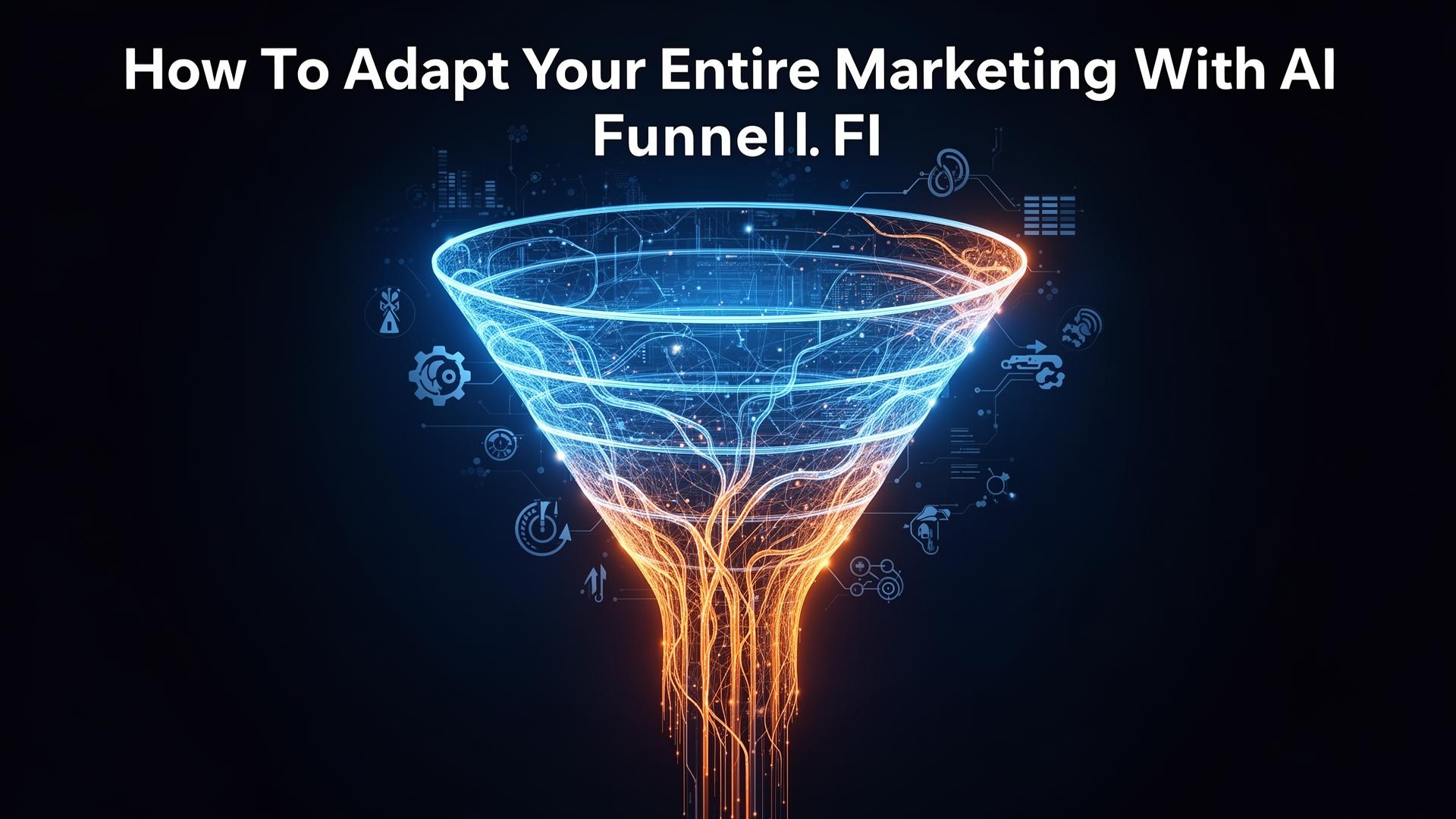
AI has changed how buyers research, compare, and decide. Your funnel needs to change too. Learn how to rebuild your marketing funnel for the AI era with automation, personalization, and predictive insights.
Key Takeaways
• AI has fundamentally changed how buyers research, compare, and decide — your marketing funnel must evolve to meet these new behaviors
• Marketing teams using AI across planning, content creation, and customer outreach are seeing 3-5x faster execution with measurably better results
• Content strategy now requires optimization for both human readers AND AI models simultaneously
• While AI dramatically increases speed and delivers deeper insights, human judgment remains essential for strategy and brand quality
• The highest-performing funnels in 2026 are those that evolve continuously using real-time data and predictive analytics
Introduction
The marketing landscape is shifting faster than most teams can adapt. If you've been in this industry for any length of time, you've witnessed trends come and go — but this is different. The rise of AI represents a fundamental restructuring of how information flows from businesses to consumers.
Today's users expect answers immediately. They jump across multiple channels before they ever land on your website. Search engines now summarize key points before showing links, and AI Overviews provide clean, structured answers that used to require an entire research session to compile.
This transformation affects every stage of the marketing funnel — not because the fundamentals of customer acquisition have changed, but because AI has reshaped how people discover, evaluate, and ultimately decide to purchase.
If you want your marketing system to remain competitive, you need to adapt your entire funnel to align with how modern buyers learn, compare options, and take action. That means developing new workflows, building smarter content systems, and training your team to direct AI effectively rather than struggling against it.
In this comprehensive guide, I'll walk you through exactly how to rebuild your marketing funnel for the AI era — stage by stage, with practical tactics you can implement this month.

The New AI Reality in Marketing
Consumer expectations have fundamentally shifted in ways that directly impact your funnel performance. Users now expect fast answers across every touchpoint. They expect straightforward explanations and content that delivers value immediately. They expect the next step in their journey to feel obvious and friction-free.
Search engines increasingly summarize information before sending traffic to your site. AI tools analyze complex questions and provide users with streamlined decision paths. For marketers, this means that teams relying on slow planning cycles or rigid workflows simply cannot keep pace with how quickly the landscape evolves.
However, this new reality also provides marketers with unprecedented advantages. You can now identify friction points in your funnel faster than ever before. You can discover demand signals and emerging trends earlier. You can build multiple variations of a campaign concept in minutes instead of days.
The speed and clarity that AI provides fundamentally changes how you should approach planning, creation, and distribution. This is precisely why systems and processes matter more than ever — AI performs best when your inputs are strong, your workflows are structured, and your team understands how to guide these models with strategic purpose.
The organizations winning right now aren't necessarily the ones with the biggest budgets. They're the ones with the most intelligent systems — and they're building compounding advantages every week.
Understanding the Restructured Buyer Journey
Traditional marketing funnels followed a predictable, linear path. A prospect would see a message, explore their options, compare the details, and eventually make a decision. Each stage led naturally to the next, and marketers could optimize each transition point independently.
AI has disrupted this pattern significantly. Modern buyers frequently skip stages entirely. They expect answers to complex questions before they've even begun their formal research process. They mix channels and search surfaces in unpredictable ways, often starting on social media, moving to AI chatbots for quick comparisons, then jumping to video platforms for reviews.
The comparison phase that once took weeks now happens in hours — sometimes minutes. Buyers synthesize information from multiple sources simultaneously, often using AI tools to help them evaluate options more quickly than any human sales team can respond.
This means your funnel must become dynamic rather than static. You need systems that can adapt to user intent in real time, meeting prospects wherever they are in their journey rather than forcing them through a predetermined sequence of steps.
Let me break down how each stage of the funnel has evolved and what that means for your strategy.
Awareness: Earning Visibility in a World of AI Summaries
The top of the funnel used to be primarily about impressions. The strategy was straightforward: get your name in front of as many people as possible, build brand recognition through repetition, and wait for interested prospects to search for more information.
That approach is no longer sufficient. AI now summarizes your content before users even click through to your website. Google's AI Overviews, ChatGPT, Perplexity, and similar tools extract and present key information directly in response to user queries. If your content isn't clear, well-structured, and immediately useful, it simply gets ignored — or worse, your competitors' content gets featured instead.
The modern awareness strategy requires several key adjustments. First, create content that answers specific questions directly and comprehensively. AI models are trained to identify and surface the most helpful, authoritative responses to user queries.
Second, use clear heading structures that AI systems can easily interpret and extract. When your content is organized logically with descriptive H2s and H3s, it's more likely to be cited in AI-generated answers.
Third, build your content for multiple formats simultaneously. The same core ideas should exist as text articles, video content, audio podcasts, and social media posts. AI surfaces content from all of these sources, and you need presence across them.
Finally, focus on building entity-based authority rather than simply targeting keywords. AI understands topics and concepts, not just keyword strings. Becoming the recognized authority on specific topics is more valuable than ranking for individual search terms.
| Traditional Awareness Tactics | AI-Era Awareness Tactics |
|---|---|
| High-volume blog production | Structured, answer-focused content |
| Keyword density optimization | Entity and topical authority |
| Gated lead magnets | Ungated value-first content |
| Single-channel focus | Multi-surface presence |
| Traffic as primary metric | Citations and references as metrics |
The fundamental shift is this: if AI cannot understand and summarize your content effectively, you won't appear in the answers that users are increasingly relying on. Visibility is no longer just about ranking in search results — it's about being the source that AI models trust and cite.

Consideration: Personalizing the Decision Path
The consideration phase has become remarkably fragmented. A potential customer might discover your brand through an Instagram ad, research your category using ChatGPT, compare specific options through YouTube reviews, and then search your brand name directly — all within a single day.
This fragmentation presents both challenges and opportunities. The challenge is that you cannot control or predict the sequence of touchpoints. The opportunity is that AI enables you to personalize every interaction based on the specific context in which it occurs.
Effective consideration-stage strategies now require building content for every surface where users actively compare options. This means having presence not just on your own website, but across review platforms, comparison sites, social media, video platforms, and AI chatbot responses.
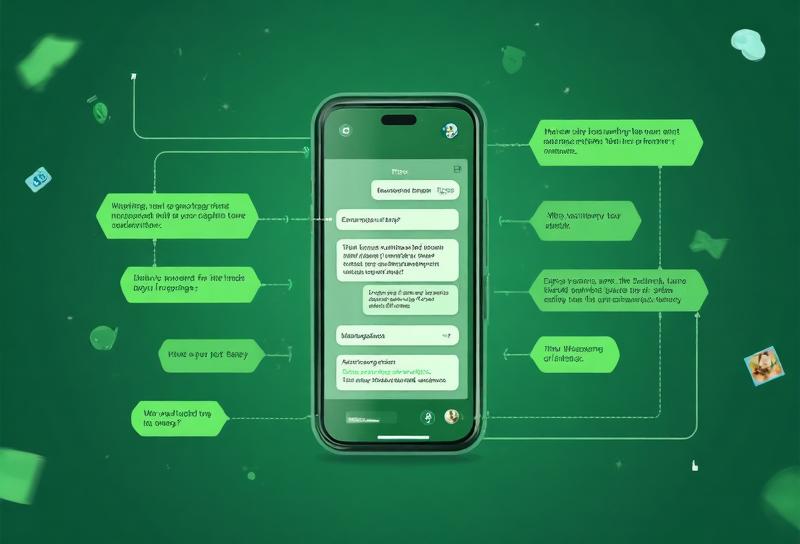
Use AI-powered automation to personalize your email and WhatsApp sequences based on actual user behavior rather than assumed demographics. When someone visits your pricing page three times, that signals different intent than someone who only read your blog. Your follow-up should reflect that difference.
Interactive tools have become essential at this stage. Calculators, quizzes, ROI assessments, and configurators don't just engage users — they generate data that helps you understand their specific needs and personalize subsequent interactions.
Response time has become critical. When a prospect reaches out with a question, responding in minutes rather than hours dramatically increases conversion probability. AI chatbots enable 24/7 qualification and initial engagement, ensuring that no inquiry goes unanswered regardless of when it arrives.
See AI-Powered Personalization in Action
Book a free demo and watch us build a personalized nurture sequence tailored to your business in under 10 minutes.
Book Your Free Demo →The brands winning the consideration phase aren't necessarily the loudest or the ones with the biggest advertising budgets. They're the ones that provide the most helpful experience at the exact moment someone is actively making a decision.
Conversion: Leveraging Predictive Insights to Close
The traditional approach to conversion was primarily about persistence. Follow up consistently, call again, send another email. The assumption was that more touchpoints eventually led to more sales.
AI fundamentally changes this equation. Rather than applying equal pressure to all leads, you can now predict with reasonable accuracy who's ready to buy and when they're most likely to convert. This allows for far more efficient use of sales resources and significantly better customer experiences.
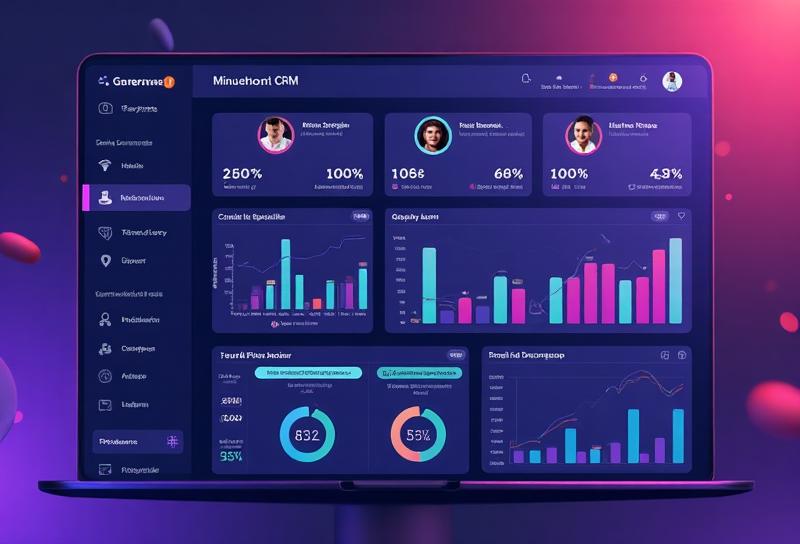
AI-powered lead scoring systems analyze behavioral patterns across your entire funnel — website visits, email engagement, content consumption, chatbot interactions — and assign priority scores that help your sales team focus on the most promising opportunities.
Predictive analytics can suggest optimal contact timing based on historical patterns. If your data shows that prospects who download a specific resource typically convert within 72 hours, you can ensure they receive the right follow-up at the right time.
Dynamic offers based on user behavior have replaced generic discounts. When you understand what content someone has consumed and what questions they've asked, you can present offers that address their specific concerns and motivations.
Checkout optimization through AI includes everything from intelligent form design to automated recovery for abandoned carts and incomplete applications. These systems can identify the exact point where prospects drop off and intervene with targeted messages to bring them back.
| Traditional Conversion Tactics | AI-Era Conversion Tactics |
|---|---|
| Same follow-up sequence for everyone | Behavior-based dynamic sequencing |
| Manual lead qualification | AI-powered predictive scoring |
| Intuition-based timing | Data-driven contact windows |
| Generic promotional offers | Dynamic personalization |
| Persistent pursuit until outcome | Smart nurture with intelligent exit points |
The highest-converting funnels don't chase every lead with equal intensity. They focus energy and resources on the prospects most likely to close — and they identify those prospects through data analysis rather than guesswork.
Retention: Proactive Engagement Over Reactive Support
Customer acquisition is expensive. By most estimates, acquiring a new customer costs five to seven times more than retaining an existing one. This makes retention not just important, but essential for sustainable profitability — and AI transforms how you approach it.
Traditional retention strategies were fundamentally reactive. You waited for customers to encounter problems, reach out with complaints, or simply stop engaging. Then you scrambled to save them, often with discounts or special offers that eroded margins.
AI enables a proactive approach. Usage pattern analysis can identify churn risk before customers themselves realize they're disengaging. Subtle changes in login frequency, feature usage, support ticket patterns, or engagement metrics often signal potential problems weeks before a customer decides to leave.
Automated check-ins triggered by behavioral signals ensure that customers receive attention when they need it most. If a user's activity suddenly drops, an intelligent system can trigger a personalized outreach asking if they need help or if anything has changed.
Personalized upsell and cross-sell recommendations based on actual usage patterns replace generic promotional campaigns. When you understand what features a customer actually uses and what outcomes they're achieving, you can suggest expansions that genuinely add value.
AI-powered customer support enables instant resolution for common issues while routing complex problems to human agents with full context. This dramatically improves the support experience while reducing costs.
The research on retention economics is compelling: a 5% improvement in customer retention can increase profits by 25% to 95%, depending on the industry. AI makes this kind of improvement achievable by enabling the kind of proactive, personalized attention that was previously impossible at scale.
The Evolving Role of Your Marketing Team
AI changes what your team does every day — and this is perhaps the most important adaptation you need to make. The transition isn't optional, and organizations that resist will find themselves at an increasing disadvantage.
In the traditional model, your team performed the work directly. They conducted research, wrote content, designed assets, built campaigns, executed follow-up sequences, and analyzed results. Each of these tasks required significant time and specialized skills.
In the AI-augmented model, your team directs AI to perform much of this work. They provide strategic guidance, review and refine outputs, ensure quality standards are met, and optimize systems for continuous improvement. The nature of the work shifts from execution to orchestration.
This isn't about replacing people with machines. It's about multiplying what each person can accomplish. A content writer who previously produced three articles per week can now produce ten or fifteen — with AI handling first drafts and the human applying expertise, judgment, and creativity to polish and improve.
The skill requirements are shifting accordingly. Writers are becoming AI content directors and editors who craft effective prompts and refine generated content. Designers are becoming brand guardians and AI art directors who guide visual generation tools. Salespeople are becoming relationship managers who handle high-value interactions while AI manages initial outreach and qualification. Analysts are becoming insight interpreters and strategists who translate AI-generated data into actionable recommendations.
Transform Your Marketing Team's Capabilities
Discover how Bharat Funnels' AI tools can multiply your team's output while maintaining quality.
Start Your Free Trial →The teams that embrace this evolution will dramatically outperform those that resist it. The choice isn't between human and AI — it's between human-only and human-plus-AI. The latter wins every time.
Building AI-Ready Systems and Infrastructure
AI doesn't perform well with chaos or inconsistency. It delivers best results when operating within structured systems that provide clear inputs and enable predictable outputs. Building these systems should be a strategic priority for any organization serious about AI-powered marketing.

Prompt libraries are essential starting points. These are pre-built, tested prompts for common tasks — email sequences, ad copy variations, landing page content, social media posts, blog outlines. Rather than crafting prompts from scratch each time, your team draws from a library of proven templates that consistently produce quality results.
Brand voice documentation enables AI to maintain consistency across all outputs. This includes tone descriptions, vocabulary preferences, phrases to use and avoid, examples of excellent content, and guidelines for different contexts. The more detailed and specific this documentation, the better AI can match your brand.
Workflow templates standardize processes for content creation, campaign launches, follow-up sequences, and other repeatable activities. When every team member follows the same structured process, AI integration becomes smoother and results become more predictable.
Data hygiene is often overlooked but critically important. AI analysis and personalization depend on clean, accurate CRM data. Duplicate records, outdated contact information, incomplete fields, and inconsistent formatting all degrade AI performance. Invest in data quality before expecting AI to deliver accurate insights.
Feedback loops complete the system. You need structured ways to track what AI produces, evaluate its quality, identify improvement opportunities, and continuously refine your prompts, guidelines, and processes. Without feedback loops, AI outputs stagnate while competitors improve.
Organizations that build these systems first gain compounding advantages. Every week, their AI gets better. Their processes become faster. Their competitors fall further behind.
The AI Marketing Technology Stack for 2026
With so many AI tools available, deciding what to actually implement can be overwhelming. Let me simplify this for you.
The most effective AI marketing stack isn't about accumulating the most tools — it's about having the right integrated platform that eliminates gaps between your systems.
The core platform requirements:
A funnel builder with AI-powered generation enables rapid creation and testing of landing pages, lead capture forms, and conversion sequences. Look for platforms that can generate page layouts, write copy, and suggest optimizations based on performance data.
A CRM with predictive lead scoring centralizes all customer data and applies AI analysis to prioritize opportunities. The best systems learn from your historical patterns and improve their predictions over time.
Email and WhatsApp automation with intelligent sequencing delivers personalized messages based on behavior rather than just demographics or time-based triggers. In India, WhatsApp is particularly critical — it's where your customers actually are.
AI chatbots for 24/7 engagement handle initial inquiries, answer common questions, qualify leads, and schedule appointments without human intervention. They ensure no opportunity goes unaddressed regardless of when it arrives.
Analytics with actionable insights go beyond reporting what happened to predicting what will happen and recommending what to do about it.
The critical insight: Most businesses make the mistake of purchasing eight or ten different tools that don't communicate with each other. They end up spending significant time and money on integrations that never quite work properly, while dealing with data silos that prevent effective personalization.
The smart approach is choosing one comprehensive platform that handles all core functions. When your funnels, CRM, email, WhatsApp, and AI tools are all natively connected, the entire system works seamlessly. Leads flow automatically. Follow-ups trigger based on actual behavior. Sales teams get notified at the optimal moment.
| Disconnected Tool Stack | Integrated AI Platform |
|---|---|
| 8-10 different subscriptions | 1 unified platform |
| Manual data synchronization | Automatic data flow |
| ₹50,000+ monthly cost | ₹3,000-5,000 monthly cost |
| Complex integration maintenance | Built-in native connections |
| Slow multi-step execution | Real-time automation |
The platform you choose matters less than the integration and your team's ability to use it effectively. But integration matters enormously.

Your Two-Week Implementation Sprint
Transformation doesn't require a massive multi-month initiative. You can build meaningful momentum with a focused two-week sprint that delivers measurable results.
Week 1: Audit and Preparation
Days 1-2: Conduct a thorough audit of your current funnel. Map every stage from initial awareness through conversion and retention. Identify specifically where leads drop off and where bottlenecks slow progress. This baseline understanding is essential for measuring improvement.
Days 3-4: Identify three repetitive tasks that AI could handle. Look for activities that consume significant staff time but follow predictable patterns — initial lead response, appointment confirmation, common question answering, content brief creation. These are your quick wins.
Day 5: Document your brand voice and key messaging. Create a reference document that includes tone descriptions, example content, vocabulary preferences, and messaging frameworks. This documentation will guide all AI content generation.
Week 2: Implementation and Testing
Days 1-2: Set up AI-powered lead capture on your website. This could be a chatbot that engages visitors, smart forms that adapt based on responses, or automated WhatsApp greeting sequences. The goal is ensuring every inquiry receives immediate attention.
Days 3-4: Create one AI-assisted nurture sequence for new leads. Design a multi-step sequence that educates prospects, addresses common objections, and guides them toward a decision. Use AI to draft the content, then refine based on your brand guidelines.
Day 5: Launch the sequence and establish measurement. Track open rates, click rates, response rates, and conversion. Set up dashboards that give you real-time visibility into performance.
Start small, achieve one clear win, then expand. The organizations moving fast on AI aren't trying to perfect everything simultaneously. They start with imperfect implementations, learn rapidly from real-world results, and iterate continuously.
Real-World Results from AI-Adapted Funnels
These outcomes aren't theoretical projections — they're actual results from businesses that have implemented AI-powered funnel systems.
Digital Agency, Bangalore
This 12-person agency was struggling with campaign launch timelines. Their traditional process from client brief to live campaign took three weeks minimum, limiting how many clients they could serve effectively.
After implementing AI-assisted content creation and workflow automation, they reduced launch cycles to five days. The result: they now run 4x more campaigns with 60% lower cost per lead. Same team, dramatically different output.
SaaS Company, Mumbai
This B2B software company had four salespeople manually qualifying leads. Each person could handle roughly 40 leads per week, creating a significant bottleneck as marketing generated more inquiries.
They implemented an AI chatbot for initial qualification and routing. The chatbot now handles over 200 lead conversations weekly, asking qualifying questions and scheduling calls only for prospects who meet specific criteria. The sales team now closes 3x more deals with the same headcount because they spend time only on qualified opportunities.
Coaching Business, Delhi
This business coach was sending generic email sequences to all new leads. Open rates hovered around 12%, and course sales had plateaued despite increasing traffic.
AI-powered personalization transformed the approach. Sequences now adapt based on what content prospects consume, what pages they visit, and how they engage. Open rates jumped to 38%, and course sales increased 2.5x without additional advertising spend.
The pattern across all these examples is consistent: AI handles volume and repetitive tasks. Humans focus on relationships, strategy, and high-judgment activities. Both improve simultaneously.
Frequently Asked Questions
Where should I start if my current funnel isn't AI-ready?
Begin with workflows that touch every channel and consume significant time. Research processes, content briefs, reporting, and follow-up sequences are excellent starting points because they're relatively easy to augment with AI and offer immediate, measurable time savings.
Will AI eventually replace my marketing team?
No. AI accelerates execution and handles repetitive tasks, but your team provides the strategic direction, judgment, creativity, and quality oversight that AI cannot replicate. The nature of the work shifts from manual execution to intelligent orchestration — but human expertise remains essential.
How do I maintain brand quality when using AI for content creation?
Establish clear guardrails before you begin. Use structured briefs that specify tone, audience, objectives, and constraints. Create standardized output formats. Define explicit editorial criteria for what passes review. Review all AI outputs carefully and refine your prompts continuously until they consistently match your brand voice.
How do I introduce automation without disrupting existing workflows?
Start with small, contained experiments rather than wholesale process replacement. Automate one simple, repetitive task and build team confidence with that success. Add complexity incrementally as your team develops proficiency with AI tools and understands how to guide them effectively.
How much should I expect to invest in AI marketing automation?
With integrated platforms like Bharat Funnels, you can access AI funnels, CRM, WhatsApp automation, and chatbots for ₹3,000-5,000 monthly. This typically replaces ₹50,000 or more in separate tool subscriptions while eliminating integration headaches.
How quickly will I see measurable results?
Most organizations see meaningful improvement within two to four weeks of implementation. AI-powered lead response and chatbots often show positive impact within the first few days, as immediate follow-up dramatically improves conversion from existing traffic.
Conclusion
The marketing funnel isn't dead — it's evolved. And the organizations that recognize and adapt to this evolution are pulling ahead of competitors who cling to outdated approaches.
AI hasn't replaced the fundamentals of awareness, consideration, conversion, and retention. These stages still represent the essential journey from stranger to customer. What AI has changed is how each stage operates and what tactics work within them.
Modern buyers move faster than ever before. They expect instant, accurate answers to complex questions. They compare options across surfaces and platforms you don't control. They make decisions in hours rather than weeks.
The businesses succeeding in this environment share several characteristics. They create content optimized for both human readers and AI models. They personalize the consideration phase using behavior-based automation rather than generic sequences. They leverage predictive insights to focus resources on ready-to-buy leads. They approach retention proactively rather than waiting for customers to complain. They've transformed their teams from executors into directors of intelligent systems.
The tools to achieve all of this exist today. The playbooks are proven. The only remaining question is whether you'll adapt your funnel to this new reality or continue operating with yesterday's assumptions.
The competitive advantage goes to organizations that move now. Every week of delay is a week your competitors use to build systems, train teams, and compound their advantages.
Start your free trial with Bharat Funnels today. Experience what an AI-adapted funnel actually looks like in practice. See the difference intelligent automation makes when it's properly integrated and strategically applied.
Your competitors are already building their AI marketing systems. The gap between those who adapt and those who don't grows wider every day.
Explore Related Features
Ready to Implement These Strategies?
Bharat Funnels makes it easy to implement everything you've learned in this article. Start your free trial and see results in days, not months.