
10 Ways for Small Businesses To Use AI in 2026
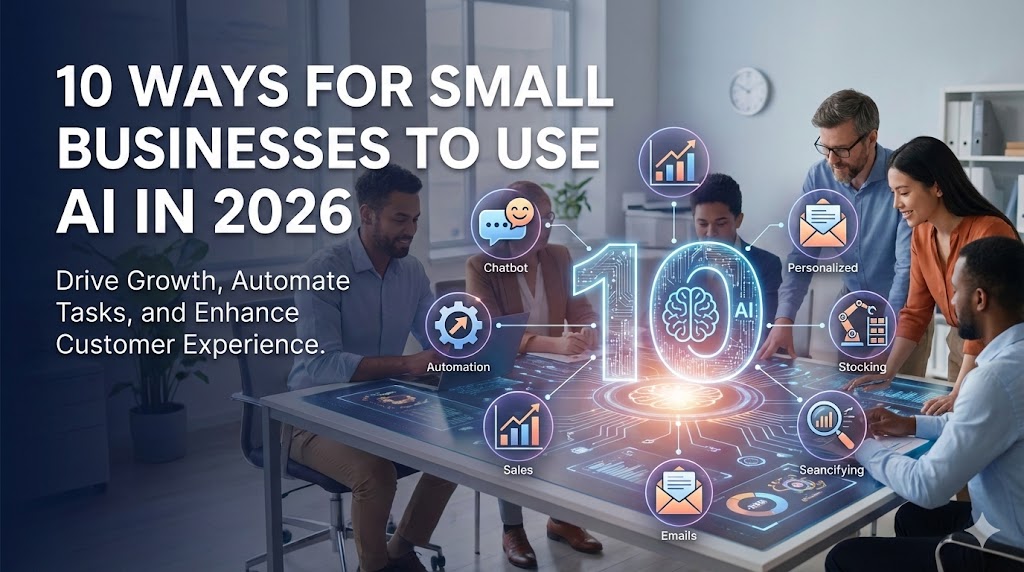
AI isn't just for big companies anymore. Discover 10 practical, affordable ways small businesses in India can leverage AI to automate tasks, boost sales, and compete with larger players in 2026.
Key Takeaways
• AI is no longer expensive or complex — small businesses can now access enterprise-level AI tools for ₹2,000-5,000/month or less
• Automation is the biggest opportunity — AI chatbots, email sequences, and workflow automation can save 20+ hours per week for a typical small business
• Customer service transformation — AI-powered WhatsApp bots can handle 80% of common customer queries instantly, 24/7
• Content creation at scale — AI tools can help small businesses produce professional marketing content without hiring expensive agencies
• Data-driven decisions — AI analytics help small businesses understand customer behavior and optimize marketing spend
• The businesses that adopt AI in 2026 will have an unfair advantage over competitors still doing everything manually
Introduction
Let me share something that might surprise you.
The small kirana store owner down my street is now using AI. Not the big tech companies. Not the funded startups. A local grocery store.
He uses an AI chatbot to take orders on WhatsApp. An AI tool writes his weekly promotional messages. Another AI system predicts which products will run out and need restocking.
His monthly tech spend? Less than ₹3,000.
This is the reality of AI in 2026. It's no longer the exclusive domain of large corporations with massive IT budgets. AI has become accessible, affordable, and practical for small businesses.
But here's the problem.
Most small business owners in India still think AI is:
• Too expensive for them• Too complicated to implement• Only useful for tech companies• Something for "later" when they're bigger
Every single one of these beliefs is now outdated.
In this guide, I'll show you exactly 10 practical ways small businesses can use AI in 2026 — with real examples, actual costs, and step-by-step implementation strategies.

Why 2026 Is Different: The AI Accessibility Revolution
Before we dive into the 10 ways, let's understand why 2026 is the tipping point for small business AI adoption.
The Cost Collapse
In 2020, building a basic AI chatbot cost ₹50,000-2,00,000. Today, you can deploy one for ₹500/month. That's not a typo — costs have dropped by 95% or more.
This happened because:
• Open-source AI models became powerful enough for business use• No-code platforms eliminated the need for expensive developers• Competition among AI providers drove prices down• Indian SaaS companies built AI tools specifically for our market
The Simplicity Revolution
You no longer need to understand machine learning or hire data scientists. Modern AI tools work like any other app:
• Sign up• Connect your business accounts• Configure your preferences• Let AI do the work
If you can use WhatsApp, you can use most AI business tools.
The Integration Era
AI tools now connect seamlessly with the systems small businesses already use:
• WhatsApp Business• Payment gateways like Razorpay• Accounting software• E-commerce platforms• Social media accounts
This means you can add AI capabilities without changing how you run your business.
1. AI-Powered Customer Support on WhatsApp
Let's start with the most impactful AI application for Indian small businesses.
Why WhatsApp AI Matters
India has over 500 million WhatsApp users. For most small businesses, WhatsApp is the primary customer communication channel. But managing WhatsApp manually creates massive problems:
• Customers expect instant responses (within minutes)• Business owners can't be available 24/7• Repetitive questions eat up hours every day• Missed messages mean lost sales
How AI Solves This
An AI WhatsApp chatbot can:
• Answer common questions instantly (pricing, hours, location, availability)• Qualify leads by asking the right questions• Book appointments automatically• Send order updates and tracking information• Handle complaints with appropriate responses• Escalate complex issues to humans
Real Example: Mumbai Boutique Store
Priya runs a boutique clothing store in Mumbai. Before AI, she spent 3-4 hours daily answering WhatsApp messages. Most were repetitive:
• "What's the price of this dress?"• "Do you have this in size M?"• "When will my order arrive?"
After implementing an AI WhatsApp bot, the bot handles 85% of these queries automatically. Priya now spends 30 minutes on WhatsApp, focusing only on complex customer needs and high-value conversations.
Cost: ₹1,500-3,000/month for AI WhatsApp solutions
Ready to Automate Your WhatsApp Customer Support?
Bharat Funnels includes AI-powered WhatsApp automation with our 3-month plan at low cost.
Start Your 3-Month Plan →2. AI Content Creation for Marketing
Small businesses need consistent marketing content but can't afford agencies or full-time marketers.
The Content Problem
Effective marketing requires:
• Social media posts (daily or multiple times per week)• Email newsletters (weekly or bi-weekly)• Blog articles (for SEO)• Ad copy (for paid campaigns)• Product descriptions (for e-commerce)• WhatsApp promotional messages
Creating all this content manually takes 10-20 hours per week. Hiring an agency costs ₹50,000-2,00,000 per month.
How AI Helps
AI content tools can:
• Generate social media posts in your brand voice• Write email sequences for different customer segments• Create blog article drafts based on your expertise• Produce ad copy variations for testing• Write product descriptions from basic specifications
Important: AI Augments, Not Replaces
The best approach is AI-assisted content creation:
1. AI creates the first draft (saves 70-80% of time)
2. You review and add your personal touch
3. You ensure accuracy and brand alignment
4. AI helps optimize for engagement
Real Example: Jaipur Coaching Institute
A UPSC coaching institute in Jaipur used AI to transform their content marketing:
Before AI:
• 2 social media posts per week (created manually)• No email marketing (no time)• No blog (too expensive to hire writers)
After AI:
• 14 social media posts per week• Weekly study tips newsletter to 5,000 subscribers• 4 SEO blog articles per month• Daily motivational WhatsApp messages to students
Result: 40% increase in organic leads over 6 months.
Cost: ₹500-2,000/month for AI writing tools
3. Smart Lead Qualification and Scoring
Not all leads are equal. AI helps you focus on the ones most likely to buy.
The Lead Problem
Small businesses generate leads from multiple sources:
• Website inquiries• WhatsApp messages• Social media DMs• Phone calls• Walk-ins• Referrals
Treating all leads equally wastes time. A serious buyer gets the same attention as someone just browsing. Meanwhile, hot leads go cold because you're busy with tire-kickers.
How AI Lead Scoring Works
AI analyzes multiple signals to score each lead:
• Behavioral signals: Pages visited, time spent, content downloaded• Engagement signals: Email opens, WhatsApp responses, call attempts• Demographic signals: Location, company size, industry• Intent signals: Specific questions asked, urgency indicators
Each lead gets a score (typically 1-100). High-scoring leads get immediate attention. Low-scoring leads go into nurture sequences.
Real Example: Bangalore IT Services Company
A small IT services company was drowning in unqualified leads. Their sales team of 3 people couldn't handle 100+ inquiries per month.
After implementing AI lead scoring:
• AI automatically scored each lead• High-score leads (top 20%) got immediate calls• Medium-score leads received automated nurture emails• Low-score leads got weekly newsletters only
Result: Same team, 3x more closed deals, because they focused on the right leads.
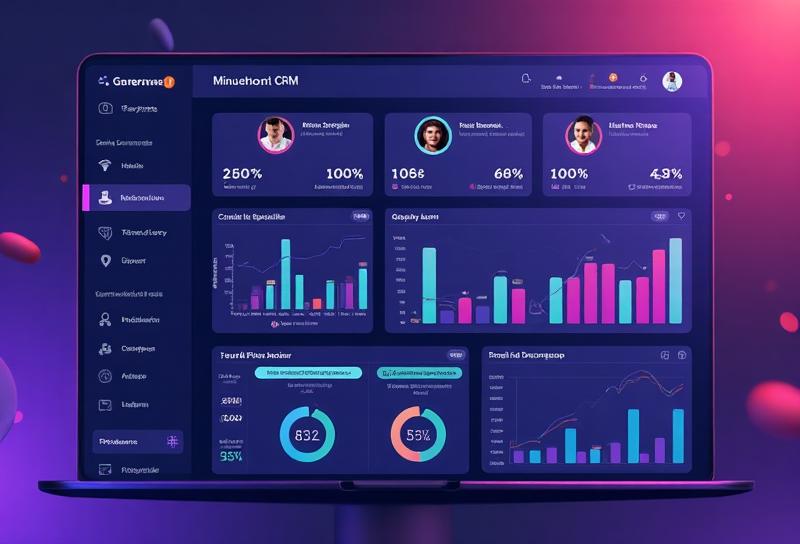
Cost: Included in most modern CRM platforms (₹2,000-5,000/month)
4. Automated Email Marketing Sequences
Email remains one of the highest-ROI marketing channels. AI makes it accessible to small businesses.
Why Email Still Matters
Despite the rise of WhatsApp and social media, email marketing delivers:
• ₹42 return for every ₹1 spent (average across industries)• Direct access to customers (no algorithm changes)• Ability to nurture leads over time• Professional communication channel for B2B
The Small Business Email Challenge
Most small businesses fail at email marketing because:
• Writing emails takes too much time• They don't know what to write• Sending manually is inconsistent• No segmentation or personalization
How AI Transforms Email Marketing
AI email tools can:
• Generate email sequences for different customer journeys (welcome series, abandoned cart, post-purchase, re-engagement)• Personalize at scale with dynamic content based on customer behavior• Optimize send times based on when each subscriber opens emails• A/B test automatically to find the best subject lines and content• Predict churn and trigger win-back campaigns
Real Example: Delhi Home Decor Business
A home decor retailer had 8,000 email subscribers but sent emails only occasionally (whenever they remembered).
With AI email automation:
• Welcome sequence: 5 emails introducing the brand and best products• Browse abandonment: Reminder emails when someone views products but doesn't buy• Post-purchase: Thank you + care instructions + related product suggestions• Re-engagement: Special offers for subscribers who haven't opened in 60 days
Result: Email revenue increased from ₹20,000/month to ₹1,80,000/month.
Cost: ₹1,000-3,000/month for AI email platforms
5. AI-Powered Social Media Management
Consistent social media presence is crucial but time-consuming. AI makes it manageable.
The Social Media Reality
To maintain an effective social media presence, businesses need:
• Posting consistency: 1-3 posts daily across platforms• Content variety: Images, videos, carousels, stories• Engagement: Responding to comments and messages• Analytics: Understanding what works• Trend awareness: Staying relevant
This easily consumes 3-4 hours daily — time most small business owners don't have.
How AI Helps
AI social media tools offer:
• Content generation: Create post ideas and captions based on your industry and audience• Visual creation: Generate images and graphics without design skills• Scheduling: Plan weeks of content in advance• Best time optimization: Post when your audience is most active• Hashtag research: Find relevant hashtags automatically• Comment management: Suggest responses to common comments
Real Example: Pune Fitness Studio
A fitness studio owner was struggling to post consistently. He'd skip days or weeks, then post randomly.
With AI social media tools:
• Weekly planning session: 30 minutes to review AI-generated content ideas• Batch creation: AI creates 7 days of posts at once• Auto-scheduling: Posts go out at optimal times• Template library: Consistent brand aesthetics without a designer
Result: Grew from 2,000 to 15,000 Instagram followers in 8 months. Class bookings increased 60%.
Cost: ₹500-2,000/month for AI social media tools
6. Intelligent Appointment Scheduling
For service businesses, appointment scheduling is often a bottleneck. AI eliminates the back-and-forth.
The Scheduling Problem
Traditional appointment booking involves:
• Customer contacts business (call, message, email)• Staff checks availability• Proposes times• Customer confirms or requests alternatives• Back-and-forth until agreement• Manual calendar entry• Reminder calls/messages
This process takes 5-15 minutes per appointment. For a business with 20 daily appointments, that's 2-5 hours of scheduling work.
How AI Scheduling Works
AI scheduling systems:
• Show real-time availability based on your calendar• Allow self-booking by customers 24/7• Prevent double-booking automatically• Send automated reminders via SMS, email, or WhatsApp• Handle rescheduling without staff involvement• Collect pre-appointment information to prepare for the visit
Real Example: Chennai Salon
A busy salon had 2 staff members spending 3 hours daily on phone calls for appointments. No-shows were a major problem (15-20% of appointments).
After implementing AI scheduling:
• Customers book online through WhatsApp or website• Automated reminders go out 24 hours and 2 hours before appointments• Easy rescheduling through self-service• Staff time on scheduling reduced from 3 hours to 30 minutes• No-show rate dropped to 5%
Cost: ₹500-1,500/month for AI scheduling tools
7. AI Sales Assistant for Follow-Ups
Most sales are lost due to poor follow-up. AI ensures no lead falls through the cracks.
The Follow-Up Problem
Research shows:
• 80% of sales require 5+ follow-ups• 44% of salespeople give up after 1 follow-up• The average response time for leads is 47 hours• 35-50% of sales go to the first responder
Small businesses struggle with follow-ups because:
• They're too busy with operations• They forget which leads need attention• Manual tracking is overwhelming• Timing is inconsistent
How AI Sales Assistants Work
AI sales assistants:
• Track every interaction with leads automatically• Suggest optimal follow-up timing based on behavior patterns• Generate personalized follow-up messages referencing past conversations• Automate routine follow-ups while flagging high-priority leads for human attention• Predict which leads are likely to convert based on engagement patterns
Real Example: Hyderabad Real Estate Agent
A real estate agent was handling 50+ active leads but closing only 2-3 deals per month. Analysis showed he was losing deals because of inconsistent follow-ups.
With an AI sales assistant:
• Every lead gets tracked with full conversation history• AI sends automated check-ins at optimal intervals• Agent gets daily priority list of leads to call• Personalized property suggestions sent based on lead preferences
Result: Closures increased from 3 to 8 per month with the same lead volume.

Cost: ₹2,000-5,000/month as part of CRM systems
8. Predictive Inventory Management
For product-based businesses, AI prevents stockouts and overstock situations.
The Inventory Challenge
Poor inventory management causes:
• Lost sales when popular items are out of stock• Cash tied up in slow-moving inventory• Storage costs for excess stock• Waste for perishable goods• Customer frustration from inconsistent availability
Traditional inventory management relies on gut feeling or simple rules (reorder when stock hits X). This doesn't account for seasonality, trends, or demand patterns.
How AI Inventory Management Works
AI analyzes:
• Historical sales patterns• Seasonal trends• Day-of-week variations• External factors (weather, festivals, events)• Promotional impact• Lead times from suppliers
Then predicts:
• When each product will run out• Optimal reorder quantities• Which products are trending up or down• Potential dead stock before it becomes a problem
Real Example: Ahmedabad Electronics Retailer
A mobile accessories shop was constantly dealing with stockouts of popular items while sitting on dead inventory.
With AI inventory management:
• System predicts demand 2 weeks in advance• Automatic reorder suggestions based on supplier lead times• Alerts for slow-moving items before they become dead stock• Festival and seasonal demand forecasting
Result: Stockouts reduced by 70%. Dead inventory reduced by 50%. Overall profitability improved 25%.
Cost: ₹1,000-3,000/month for AI inventory tools
9. AI-Powered Financial Insights
Small business owners often fly blind financially. AI provides clarity and foresight.
The Financial Visibility Problem
Most small business owners know:
• How much money is in the bank• Roughly how much they sold this month
But they don't know:
• Which products/services are most profitable• Cash flow projections for the next 3 months• Which customers are most valuable• Where they're losing money• Optimal pricing for their offerings
How AI Financial Tools Help
AI analyzes your financial data to provide:
• Profitability analysis by product, service, and customer• Cash flow forecasting based on historical patterns• Expense optimization suggestions• Pricing recommendations based on demand and competition• Anomaly detection for unusual transactions• Tax planning suggestions
Real Example: Kolkata Restaurant Chain
A restaurant with 3 locations couldn't understand why one location was struggling despite similar sales.
AI analysis revealed:
• Food costs were 5% higher at the struggling location• Staff scheduling was inefficient (overstaffed during slow hours)• Certain menu items had negative margins• Delivery app commissions were eating profits
After implementing AI recommendations: The struggling location went from losing ₹40,000/month to making ₹60,000/month profit.
Cost: ₹1,000-2,500/month for AI financial tools
10. Personalized Customer Experience at Scale
Big companies have personalization. Now small businesses can too.
Why Personalization Matters
Customers expect personalized experiences:
• 80% are more likely to buy from brands offering personalized experiences• Personalized emails have 29% higher open rates• Personalization can increase revenue by 10-15%
But small businesses traditionally couldn't personalize because:
• They don't have data scientists• Manual personalization doesn't scale• CRM systems were too complex or expensive
How AI Enables Personalization
AI personalization tools:
• Remember customer preferences and purchase history• Recommend products based on browsing and buying behavior• Customize communications based on engagement patterns• Predict customer needs before they express them• Segment customers automatically based on behavior
Real Example: Surat Textile Business
A B2B textile business sells to 500+ small retailers. Previously, all customers received the same catalogs and offers.
With AI personalization:
• Each retailer gets product recommendations based on their purchase history• Pricing and minimum orders adjust based on relationship value• Communication frequency matches each retailer's preferences• Seasonal suggestions based on their location and typical buying patterns
Result: Repeat order rate increased from 45% to 72%. Average order value up 35%.
Transform Your Small Business with AI
Bharat Funnels combines AI automation, WhatsApp marketing, CRM, and funnels in one affordable platform. Get our 3-month plan at low cost and experience the AI advantage.
Start Your AI Journey Today →Getting Started: Your 30-Day AI Adoption Plan
Ready to implement AI in your small business? Here's a practical 30-day plan.
Week 1: Foundation
• Day 1-2: Audit your current processes. List all repetitive tasks that consume your time.• Day 3-4: Prioritize based on time spent and impact on revenue.• Day 5-7: Research AI tools for your top 2-3 priority areas.
Week 2: First Implementation
• Day 8-10: Sign up for your first AI tool (I recommend starting with WhatsApp automation or content creation — highest impact, easiest to implement).• Day 11-14: Set up and configure the tool. Most modern AI tools can be operational within 2-3 days.
Week 3: Optimization
• Day 15-17: Monitor results and gather feedback.• Day 18-21: Adjust configurations based on real-world performance.
Week 4: Expansion
• Day 22-25: Implement your second AI tool.• Day 26-28: Connect tools together for integrated workflows.• Day 29-30: Document what's working and plan for next month.
Start Small, Think Big
Don't try to implement all 10 AI applications at once. Pick 1-2 that address your biggest pain points. Master those before adding more.
The businesses that win with AI aren't the ones that adopt the most tools. They're the ones that adopt the right tools and use them consistently.
Common AI Adoption Mistakes (And How to Avoid Them)
As AI becomes accessible, I'm seeing small businesses make predictable mistakes. Learn from them.
Mistake #1: Trying to Automate Everything at Once
Start with one process. Get it working. Then expand. Trying to transform everything simultaneously leads to chaos and abandonment.
Mistake #2: Expecting AI to Work Perfectly from Day One
AI improves over time as it learns from your data. Give it 2-4 weeks before judging results. The WhatsApp bot that seems clunky in week one will be much better by week four.
Mistake #3: Removing Human Touch Entirely
AI should handle routine tasks so humans can focus on high-value interactions. Don't automate everything. Keep human involvement in complex decisions and relationship-building.
Mistake #4: Ignoring Data Quality
AI is only as good as the data it learns from. Clean up your customer database before implementing AI tools. Remove duplicates, update outdated information, and ensure consistency.
Mistake #5: Not Training Your Team
Your staff needs to understand how to work with AI tools. Invest time in training. Resistance often comes from fear of the unknown.
Mistake #6: Choosing Cheap Over Appropriate
The cheapest AI tool isn't always the best choice. Consider factors like:
• Integration with your existing systems• Support in your language• Understanding of Indian business context• Scalability as you grow
Mistake #7: Not Measuring Results
Track the metrics that matter before and after AI implementation:
• Time saved• Revenue impact• Customer satisfaction• Cost per acquisition• Response times
Without measurement, you can't improve.
The Cost Reality: What Small Businesses Actually Spend on AI
Let's get specific about costs. Here's what a typical small business spends on AI tools.
Basic AI Stack (₹3,000-5,000/month)
• WhatsApp automation: ₹1,500-2,000• Content creation tool: ₹500-1,000• Email marketing with AI: ₹1,000-2,000
Intermediate AI Stack (₹7,000-12,000/month)
• All-in-one platform with AI (like Bharat Funnels): ₹5,000-8,000• Additional AI writing tools: ₹1,000-2,000• Social media AI: ₹1,000-2,000
Advanced AI Stack (₹15,000-25,000/month)
• Full CRM with AI capabilities: ₹8,000-12,000• Inventory AI: ₹2,000-3,000• Financial AI tools: ₹2,000-3,000• Advanced personalization: ₹3,000-5,000
| AI Tool Category | Monthly Cost Range | Time Saved/Month | Potential ROI |
|---|---|---|---|
| WhatsApp Automation | ₹1,500-3,000 | 40-60 hours | 5-10x |
| Content Creation | ₹500-2,000 | 20-30 hours | 3-5x |
| Email Marketing | ₹1,000-3,000 | 15-25 hours | 10-20x |
| Lead Scoring/CRM | ₹2,000-5,000 | 10-20 hours | 5-8x |
| Social Media | ₹500-2,000 | 30-50 hours | 2-4x |
| Scheduling | ₹500-1,500 | 15-30 hours | 4-6x |
| Inventory | ₹1,000-3,000 | 10-15 hours | 3-5x |
The Math Makes Sense
If your time is worth ₹500/hour (conservative for a business owner), saving 40 hours monthly with WhatsApp AI is worth ₹20,000. The tool costs ₹2,000. That's 10x ROI.
Even if you value your time at ₹200/hour, you're still getting 4x ROI. And that's before considering the revenue increase from faster response times and better customer service.
The Competitive Advantage: Why Early Adopters Win
Here's the uncomfortable truth.
AI adoption among small businesses is accelerating. The businesses that embrace AI in 2026 will have significant advantages over those that wait.
Speed Advantage
AI-enabled businesses respond to leads in seconds. Manual businesses take hours or days. In a world where the first responder often wins the deal, this matters enormously.
Cost Advantage
AI reduces operational costs, allowing businesses to either improve margins or offer competitive pricing. Businesses still doing everything manually will struggle to compete.
Quality Advantage
AI ensures consistency. Every customer gets the same quality of service regardless of when they contact you or who handles their query. Human-dependent service quality varies.
Scale Advantage
AI lets small businesses punch above their weight. A 3-person team with good AI tools can serve customers like a 10-person team without AI.
Data Advantage
AI tools collect and analyze data automatically. Over time, businesses using AI develop deeper customer insights than competitors relying on intuition.
The Window Is Open — But Not Forever
Right now, most small businesses aren't using AI effectively. This creates an opportunity. Early adopters can capture market share, build customer loyalty, and establish competitive moats.
But as AI becomes more mainstream, this advantage will diminish. The businesses that wait will find themselves playing catch-up against competitors who started earlier.
Frequently Asked Questions
Is AI safe for my business data?
Reputable AI tools use encryption and follow data protection standards. Choose established providers, read their privacy policies, and avoid free tools from unknown sources. For sensitive data, look for tools that don't use your data to train their models.
Do I need technical skills to use AI?
No. Modern AI tools are designed for non-technical users. If you can use WhatsApp, you can use most AI business tools. Setup wizards guide you through configuration, and most platforms offer support.
Will AI replace my employees?
AI replaces tasks, not people. Your employees will shift from repetitive work to higher-value activities. The salon receptionist who used to spend 3 hours on scheduling calls now spends that time on customer consultations and upselling.
How long before I see results?
For some applications like WhatsApp chatbots, you'll see immediate impact. For others like lead scoring, give it 4-6 weeks to accumulate enough data for accurate predictions. Most businesses see meaningful results within 30-60 days.
What if AI makes mistakes?
AI will make mistakes, especially initially. Build human oversight into your processes. Review automated responses periodically. Have escalation paths for complex issues. Over time, mistakes decrease as AI learns from corrections.
Which AI tool should I start with?
Start with the tool that addresses your biggest time drain or revenue opportunity. For most small businesses, that's WhatsApp automation or content creation. Both are easy to implement and show quick results.
Can I afford AI if I'm just starting out?
Yes. Many AI tools offer free tiers or trials. Start there, prove the value, then upgrade. Some tools are as cheap as ₹500/month. The question isn't whether you can afford AI — it's whether you can afford to compete without it.
What about AI tools specifically for Indian businesses?
Indian SaaS companies are building AI tools designed for our market. They understand UPI, WhatsApp Business, GST, and Indian customer behavior. Look for platforms like Bharat Funnels that are built for Indian businesses.
Conclusion: Your AI Journey Starts Now
We've covered 10 ways small businesses can use AI in 2026:
1. WhatsApp Customer Support — Automate 80%+ of customer queries
2. Content Creation — Produce professional marketing content affordably
3. Lead Qualification — Focus on the leads most likely to convert
4. Email Marketing — Nurture leads automatically with personalized sequences
5. Social Media Management — Maintain consistent presence without burning time
6. Appointment Scheduling — Eliminate booking hassles and reduce no-shows
7. Sales Follow-Ups — Ensure no lead falls through the cracks
8. Inventory Management — Prevent stockouts and reduce dead inventory
9. Financial Insights — Understand profitability and forecast cash flow
10. Customer Personalization — Deliver personalized experiences at scale
The technology is ready. The costs are affordable. The competitive advantage is real.
The only question is: Will you be an early adopter who gains the advantage, or a late follower who plays catch-up?
Start with one AI application this week. See the results. Then expand from there.
The small businesses that thrive in 2026 and beyond won't be the biggest or the best-funded. They'll be the ones that leverage AI to work smarter, serve customers better, and compete effectively against larger players.
Your AI journey starts now.
Ready to Transform Your Business with AI?
Bharat Funnels is India's all-in-one AI automation platform built for small businesses. Get WhatsApp automation, AI content, CRM, funnels, and more in one affordable platform.
Start Your 3-Month Plan Today →Explore Related Features
Ready to Implement These Strategies?
Bharat Funnels makes it easy to implement everything you've learned in this article. Start your free trial and see results in days, not months.